
Does Mastering Make Music Louder?
One of the most misunderstood aspect of audio mastering is the effect on the volume and presence of a track. Many people who don't trust most audio mastering engineers believe that they're simply raising the volume on their track to make it sound louder and consequently better.
Make no mistake, louder music generally sounds better because certain frequencies can only be perceived at a louder volume when the full pallet of the audio is able to come through. And while there are undoubtedly a number of charlatans out there masquerading as audio mastering engineers while they're simply boosting the volume through dumping copious amounts of compression, limiters, or even just boosting the volume nob itself (sad but true), it takes a skilled and seasoned engineer of audio mastering to walk that line of improving the audio without using gimmicks which squash the dynamics of your track for the sake of volume.
Let's talk about how and why mastering will typically make music louder specifically.
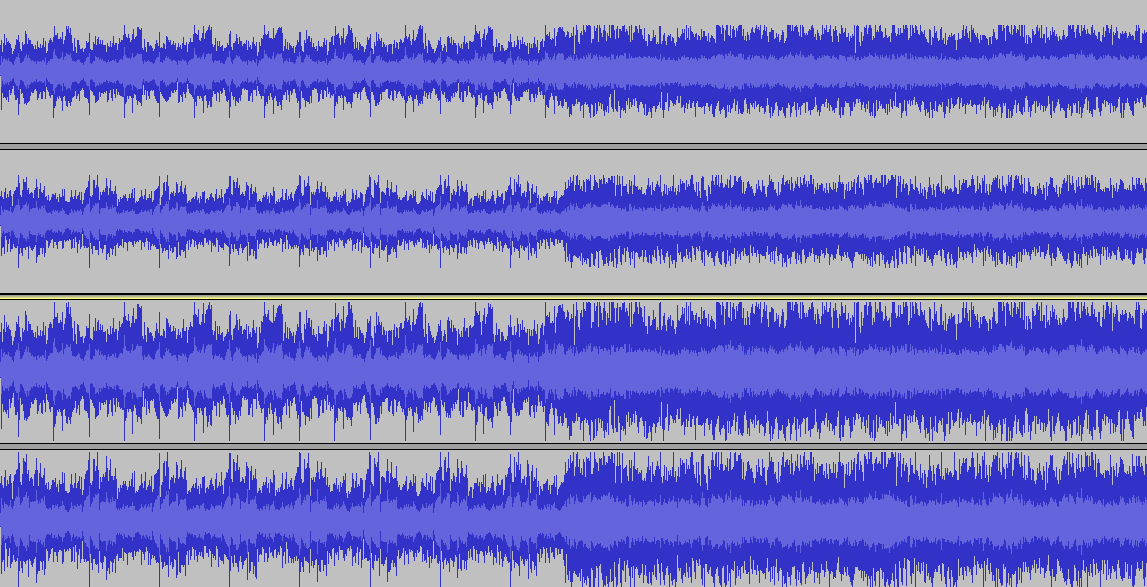
Compression is an effect which I just mentioned. Whether it's in analog or digital form, applying compression processing to a finished mix will sacrifice dynamic extremes, taking a bit off of the top and adding a bit to the bottom of the volume spectrum, for the sake of a more unified sounding mix which has more presence to it. The trick is to use it sparingly, however, as too much will give you that all-too-familiar sausage wave form which even many to most major label artists' music is guilty of.
The offset effect of this is that it brings up the overall levels of the audio while providing more presence, giving a track a slicker and, for lack of a better term, a more professional sound.
Too much compression will of course squash the dynamics to where you're listening to three minutes of audio at roughly the exact same level. This fatigues most listener's ears and will cause them to subconsciously tune out your music because it's not engaging or exciting their ears, thus undoing what the engineer was trying to accomplish in the first place.
A limiter is another tool which is even more commonly abused for the sake of just bringing up the overall level of a track. Where a compressor will reduce the frequency of the audio going over a certain point in terms of level, a limiter takes a set point and completely inhibits the audio from ever going over that point.
This ceiling is useful for keeping an individual track like a vocal take in the overall mix from going too hot and into the red, ie clipping, but if it's used too drastically in a finished mix, it will remove the dynamics by repeating that ceiling level of volume at the loudest parts of an album over and over, thus creating the same fatigue effect which compression can be guilty of when abused.
Compression in combination with some light limiting can invisibly raise the overall level of a track, meaning boost the volume without an ill side-effects, but like anything you add in the mastering stage, less is generally more. Or perhaps better said, everything in moderation. Our engineers at AudioMasteringCDMastering.com are skilled in finding that sweet spot and just the right balance for getting the most out of your mix, so begin with a free test sample and experience the AudioMasteringCDMastering engineer's difference today for free.